Today I Learned
Jigokudani Snow Monkeys: Why They Bathe & How to Visit
Why Jigokudani's monkeys learned to bathe, when to see them, and how to plan the forest walk, online tickets and December 2026 admission changes.
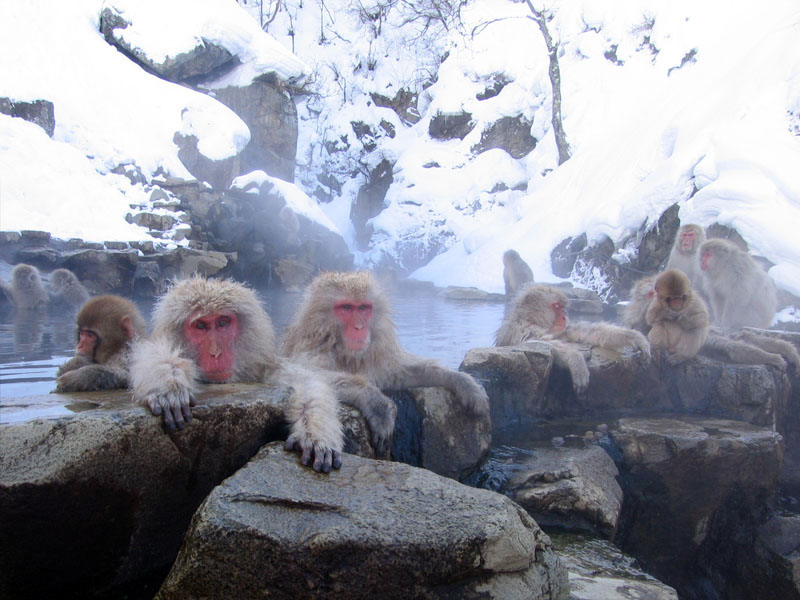
In the mountains of Nagano, Japanese macaques have learned to use a hot spring. At Jigokudani Yaen-koen, better known as Snow Monkey Park, you can watch this habit up close. The important part of planning a visit is understanding why it happens: cold weather gives the animals a reason to get into the water. The park recommends December to March for bathing monkeys. Official first-time visitor guide
You can visit in other seasons, but even seeing the monkeys is not guaranteed. Autumn is particularly unpredictable. Keep the walk, the weather and the animals’ own timetable in your plans. Official visitor information
Research note: Official park and transport information checked on October 2, 2026. We have not visited in person. The admission prices below change on December 1, 2026.
Photo: Yosemite, February 2005, via Wikimedia Commons, CC BY-SA 3.0. Original JPEG used without modification and distributed under the same licence. This historical photograph does not show current conditions.

How the monkeys acquired their own onsen
The park opened in 1964 in the Yokoyu River valley. Its regular feeding routine brings wild macaques to a place where people can observe them; the animals can still leave. Visitors cannot feed them. The park’s account
According to the park, a young monkey learned to enter the outdoor bath at Korakukan, the nearby inn. Other monkeys followed. To separate monkey bathing from human bathing, a pool was built for the animals inside the park. The behaviour then passed between generations. How bathing began
The familiar image of a red face above steaming water is only one part of their day. Some individuals dislike bathing, and feeding and social life take precedence. The park explains that warm weather removes much of the reason to soak. The monkeys’ bathing behaviour
That variation is interesting to researchers too. A 2026 study compared adult female bathers and non-bathers at Jigokudani, finding differences in indicators of lice distribution and some gut bacteria. The authors call for further research into health outcomes. A photograph of monkeys sharing a pool is also a glimpse of a behaviour scientists are still trying to understand. Research abstract in Primates
Choose the season for what you want to see
| Your reason for going | What to plan around |
|---|---|
| Monkeys soaking in cold weather | The park identifies December–March as the main bathing season. Bring winter footwear. |
| Seeing young monkeys | Spring is the birth season; sightings still depend on the animals being present. |
| An autumn forest visit | Wild food is abundant in the mountains, so the troop may spend time elsewhere. Check the day’s updates. |
These expectations come from the park’s official seasonal guidance.
In autumn, nuts and fruit keep the monkeys busy foraging before winter. That helps explain why a park opening time cannot promise a monkey arrival time. A year in the monkeys’ lives
Before travelling, open the official homepage and check its current conditions, staff updates and live camera. A camera image tells you what was happening when it was captured; it cannot reserve that scene for your arrival.
Online tickets and the December 2026 price change
Online admission tickets are for a specific date and can be bought up to three months ahead, according to the August 2026 launch notice. Without an online ticket, visitors may have to wait, or may be refused entry when the park is congested. The homepage gives online ticket holders priority during December–April. Start with the official ticket page. Online ticket announcement
For ordinary individual admission, the official September 20 notice announces these prices:
| Visitor | At the park, through November 30, 2026 | At the park, from December 1, 2026 | Online, from December 1, 2026 |
|---|---|---|---|
| Adult, 18 and over | ¥800 | ¥1,000 | ¥880 |
| Child, elementary through high school | ¥400 | ¥500 | ¥440 |
Children under six enter free when accompanied by a guardian. The child category follows the park’s published school-stage wording; if the age and school-stage categories overlap for a student, ask the park which ticket applies. These are admission prices, not transport fares. Check the price for your selected date before purchasing. Current official fees · Dated fee revision notice
Getting there from Nagano: the bus stop is not the entrance
Two public transport approaches lead to the Snow Monkey Park bus stop:
- Direct bus through December 4, 2026: Nagaden Bus’s Shiga Kogen express service from Nagano Station’s east side. Check the current timetable for both journeys.
- Direct bus, December 5, 2026–April 5, 2027: Use Ex24, the Snow Monkey Park express, from Nagano Station’s east exit, stop 24. Ex23, the Shiga Kogen express, will not stop at Snow Monkey Park during this period. Read the operator’s winter service announcement.
- Train and local bus: Nagano Dentetsu from Nagano to Yudanaka, followed by a bus towards Snow Monkey Park. Check the local bus route listings.
For Ex24, the operator asks passengers to buy the bus-and-park-admission set ticket online in advance. Passengers board in queue order; a full bus means waiting for the next departure. Same-day tickets at Nagano Station’s east-exit information office may be unavailable after online sales reach their limit, and payment aboard the bus is not offered. Winter bus ticket conditions
Both the direct-bus and train-and-bus approaches require a walk. The park’s route table gives approximately 35 minutes from the bus stop to the park via the Kanbayashi Onsen side. Allow extra time for snow or ice. The route includes unpaved ground, slopes, steps and stairs, and the park says wheelchairs and carts cannot use it. Official access details
If driving, check the access notices before choosing a car park. The narrow road from Shibu Onsen to the closer Jigokudani car park closes in winter. Winter visitors approach on foot from the Kanbayashi side; busy periods can also bring parking restrictions. Road and walking routes · 2026 online ticket and winter parking notice
Hours, footwear and watching without crowding
The standard hours are 8:30–17:00 in April–October and 9:00–16:00 in November–March. There is no regular closing day, but weather, the monkeys’ movements or a natural disaster can cause a closure or shorter hours. The park asks visitors to arrive at least 30 minutes before closing and leave by closing time. Plan the return walk and your bus connection as well as admission. Official hours
Wear hiking shoes or suitable trainers in warm weather, and snow or rubber boots in winter. The park recommends simple traction aids for winter walking. Official clothing advice
The observation rules are straightforward:
- Do not offer or display food, touch the animals, shout at them or stare closely into their eyes.
- Keep your distance. If a young monkey approaches, move away.
- Photographs and videos are permitted, but selfie sticks, drones and putting a camera in the bath are prohibited.
Read the official observation and photography rules before visiting.
You cannot bathe with the monkeys. This is a wildlife observation facility. If you want a hot spring visit for yourself, our sento and onsen guide explains what to look for at a human bathing facility. The park’s bathing restriction
For another unexpected use of spring water, Harie’s household kabata in Shiga put flowing water and carp into everyday domestic life. To plan Jigokudani, check today’s park information, choose your date, then match your transport to the forest walk.