Today I Learned
Japan, apparently, still sells paper train tickets right next to its tap-to-pay IC card readers
Suica and Pasmo handle most Tokyo commutes, but every JR and metro station still prints orange paper tickets from a vending machine. The two systems run in parallel — by design.
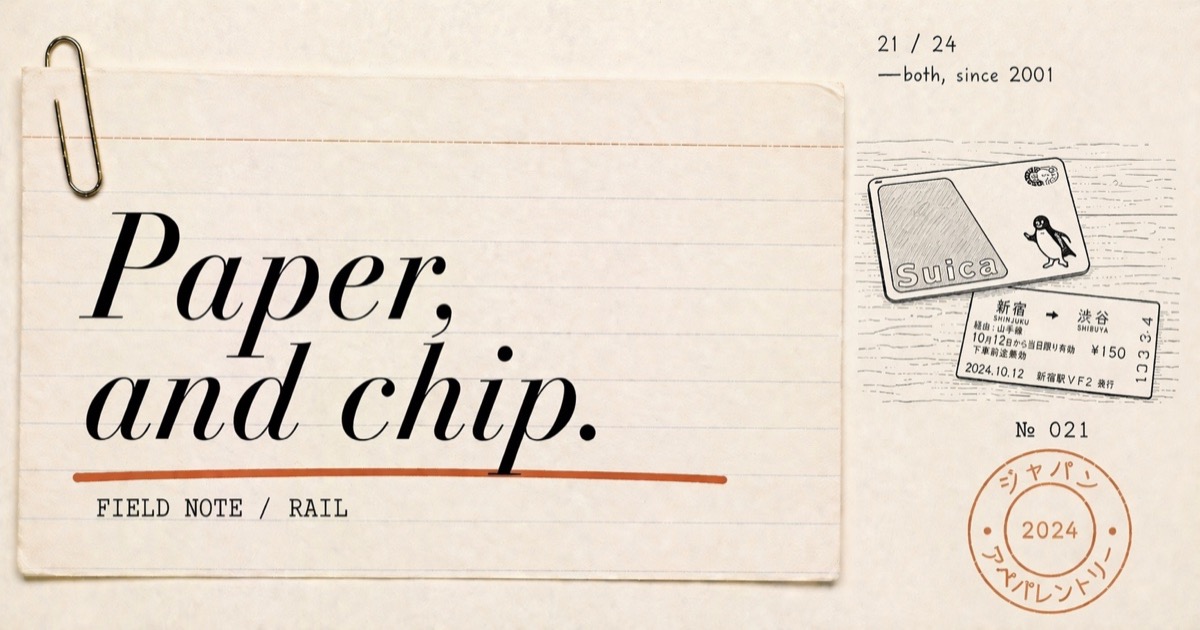
Two systems, one ticket gate
Stand at the ticket gate of any major Tokyo station — Shinjuku, Tokyo, Shibuya — and watch the flow. Most commuters tap a green Suica or pink Pasmo card on the reader and walk through without breaking stride. But every fourth or fifth person feeds a small orange paper ticket into a slot at the front of the gate. The ticket is sucked through, processed, and pops out the back, where the passenger picks it up and continues.
The same gate, the same second, two completely different fare-collection systems. Both fully supported. Neither retiring the other.
The fact
Japan’s IC-card system — Suica (JR East), Pasmo (Tokyo private rail), Icoca (JR West), Toica (JR Central), Kitaca (JR Hokkaido), and several others — has been live since 2001 and now handles the majority of urban commute taps. The cards are mutually interoperable nationwide and work for trains, buses, vending machines, and konbini purchases.
But every JR and metro station still operates traditional ticket vending machines that print magnetic-stripe paper tickets in cash. The ticket gates have a slot for these tickets next to the IC reader. Both interfaces are first-class — neither is a fallback. JR East publishes route fares as both an IC tap rate and a paper ticket rate, sometimes with a one-yen difference between the two.
The two systems have run in parallel for roughly 25 years, with no announced sunset for paper.
Why it works this way
Several constraints stack:
- Tourists without an IC card. A first-time visitor stepping off a Narita Express needs a way to ride the trains today, not after registering for a card. The paper machines stay because the alternative is stranded passengers.
- The minimum-balance problem. IC cards require a positive balance at tap-in. For a single 150-yen ride by an occasional rider, topping up a card to do so is friction. Paper tickets handle the long tail of one-off journeys.
- The legal-record problem. Limited express and shinkansen tickets have historically been printed as the legal travel record, with seat numbers and reservation details. Even when these are now sold via apps and IC, the paper version remains the canonical artifact.
- Failure modes. When an IC card has an insufficient balance mid-trip, the passenger uses a fare-adjustment machine and walks out with a paper supplemental ticket. The paper system is also the IC system’s safety net.
Where to see it
- Any major JR station. The orange paper machines line one wall; the IC top-up machines line another. Look for the small printed ticket slot on the front of every gate — that is the paper interface.
- Tokyo Metro stations. Same dual interface. The metro lets you buy a paper day-pass that no IC card equivalent fully replicates.
- Shinkansen gates. Reserved-seat travel still issues a paper ticket as the formal record, even when payment is via app or IC.
Closing
Most rail systems treat paper tickets as a legacy artifact that should have been retired a decade ago. Japan keeps them next to a tap-to-pay reader that processes a billion taps a year, and treats both as live products. Apparently the future and the past can share a turnstile.