Today I Learned
Omi Jingu's Water Clock: A Shrine and Clock Museum in Otsu
Visit Omi Jingu's water-clock replica and Clock Museum in Otsu: the story of Japanese timekeeping, museum hours, fees and the walk from the station.
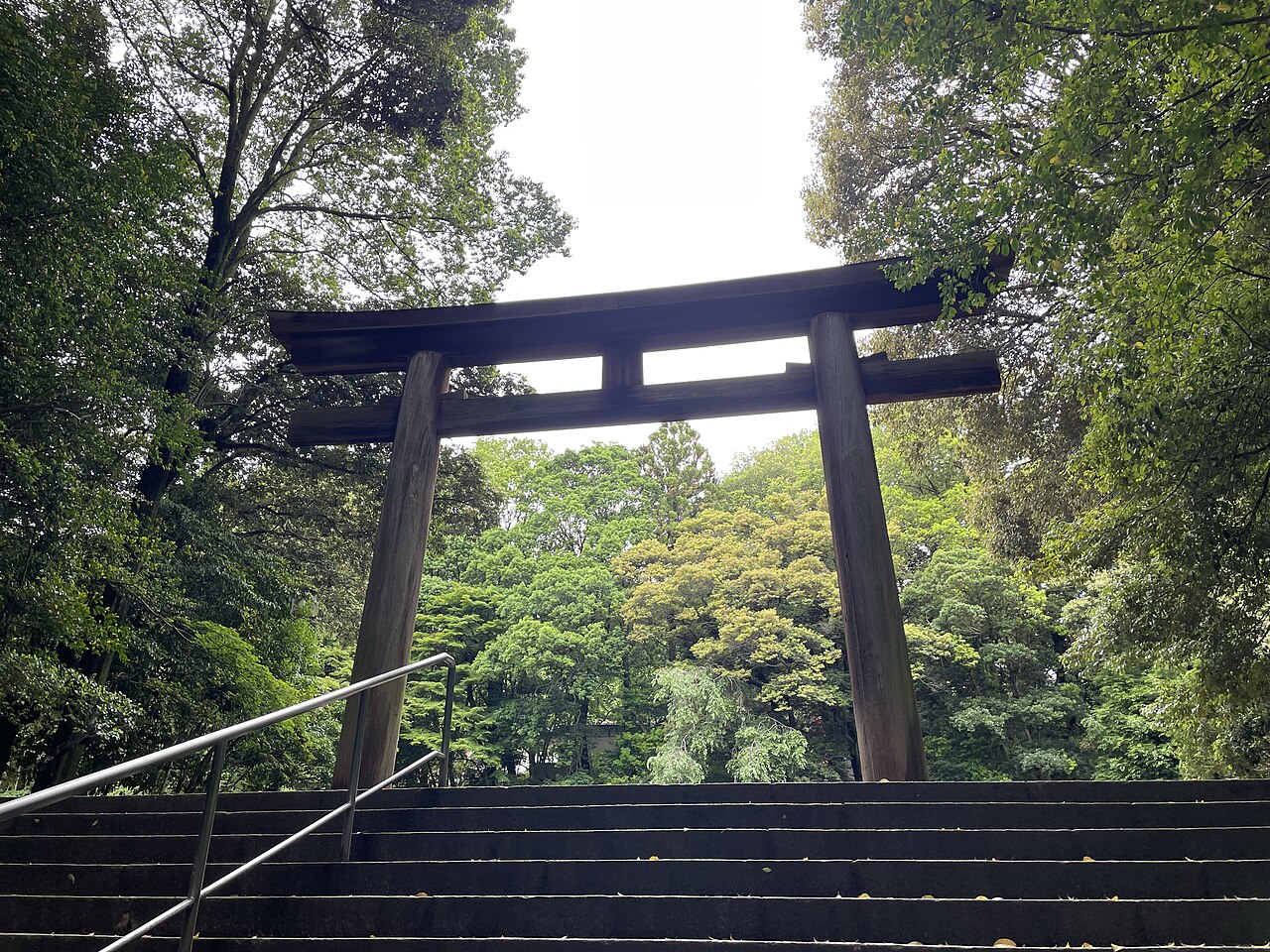
Omi Jingu in Otsu, Shiga, has a water-clock replica on its grounds and a museum devoted to clocks. The shrine honours Emperor Tenji, whose story connects this place with early Japanese timekeeping. Outside the museum, a dragon-shaped fire clock adds another unexpected way of measuring time. Official English visitor guide
Apparently, a shrine visit can begin with a question about plumbing: how do you turn flowing water into the time of day?
Research note: This guide uses official information checked on October 15, 2026. We have not visited in person or verified the clocks’ operation on a travel date.
Why is there a water clock at a shrine?
The Japanese word rokoku (漏刻) refers to a water clock. A researcher at the Nara National Research Institute for Cultural Properties describes the principle: water passes through several linked tanks, and the amount collecting in the lowest tank gives a measure of time. His explanation concerns the reconstructed Asuka clock; it explains the technology without establishing every detail of Omi Jingu’s replica. Researcher’s explanation
The historical dates need care. The institute’s 2026 Time Day article distinguishes two records in the Nihon Shoki: the crown prince who became Tenji made a water clock in 660, and a clock was installed in 671. The latter record is associated with June 10, now observed as Time Day. The two entries mark separate moments in Japan’s adoption of water-clock technology. Historical records and Time Day
Omi Jingu’s own timeline records the 671 installation at the Otsu palace and the use of bells and drums to announce time. The water measured the interval; sound carried the announcement. Shrine’s historical timeline
The water clock on the shrine grounds is a modern replica. The ministry’s visitor interpretation describes it as a full-size working replica, with the fire clock nearby. We have not checked whether either operates during an ordinary visit. The shrine itself was established in 1940, near the former palace site. Replica and shrine background
The outdoor display and the museum offer two ways to explore that history: an old way of organising the day, and the many forms a clock can take.
Water outdoors, clocks indoors
The Clock Museum and Treasure House opened as a clock museum in 1963 and reopened after renovation in 2010. Its first floor presents Japanese wadokei alongside timepieces from other places and periods. The second floor holds shrine treasures and works of art, including a reproduction, rather than the original, of Soga Shohaku’s Landscape with Tower screen. Museum’s English introduction
The official prefectural visitor guide lists a water clock, sundial and fire-clock display outside. A visit to the grounds and a visit inside the museum therefore involve different displays and different opening arrangements. Shiga’s museum guide
Museum hours and admission
| Practical detail | Shrine information checked October 15, 2026 |
|---|---|
| Museum opening hours | 9:30–16:30 |
| Last museum admission | 16:00 |
| Normal museum closure | Monday, except public holidays |
| Adult admission | ¥300 |
| Elementary- and junior-high-school pupils | ¥150 |
| Younger children | Free |
| Shrine visiting hours | 6:00–18:00 |
Special exhibitions can change the museum admission fee. Check the current Japanese museum page before travelling; the English page also gives the normal hours and fees. The shrine’s longer visiting hours do not mean the indoor museum remains open until 18:00.
The operator suggests about 15 minutes or more for the museum and 5–10 minutes or more for the sundial and water-clock displays. Treat these as starting estimates, not a promise for the whole shrine visit. Operator’s visiting estimates
Getting there from the station
The address is 1-1 Jingucho, Otsu, Shiga. Shiga’s official visitor guide gives these walking estimates:
- Omi-jingu-mae Station, on the Keihan Ishiyama–Sakamoto Line: about 10 minutes.
- Otsukyo Station, on the JR Kosei Line: about 20 minutes.
These are walks from two different stations. Use the guide’s names when planning your route, and allow extra time for the shrine grounds. Official access information · Keihan’s Omi-jingu-mae Station information
The shrine lists a slope from beside the clock museum to the outer worship hall and an accessible toilet beside the museum. That description does not establish a step-free route through every museum floor or from either station; ask about your particular route if needed. Shrine’s accessibility information
Before you photograph or plan a demonstration
We have not verified the museum’s current interior-photography policy or group-booking arrangements. Ask staff before photographing exhibits, follow posted signs and check with the shrine before planning a group visit. An outdoor clock display does not establish permission to photograph or publish images from the indoor collection.
The shrine holds its Rokoku Festival on June 10. That annual occasion is separate from an ordinary museum visit; do not expect a live fire-clock demonstration just because a clock is on display. Consult the operator’s event information for your date. Shrine’s account of Time Day and the festival
If you enjoy seeing time take a physical form, read about Nima Sand Museum’s one-year hourglass. Elsewhere in Shiga, Harie’s kabata water village shows water serving a different daily purpose. More places and their background are gathered in Curious Japan.
Torii gate and approach at Omi Jingu, May 25, 2025. Photo: Higa4 / Wikimedia Commons, CC0 1.0 Universal. The source JPEG is unedited; display uses cropping and slight colour adjustments.
