Today I Learned
Shime Winding Tower: Fukuoka's Concrete Coal-Mine Giant
Decode Shime's 47.6-metre coal-mine tower near Fukuoka: the machinery behind its shape, exterior viewing, bus planning and limits on interior access.
Shime’s 47.6-metre concrete tower was built to raise coal and transport miners through a vertical shaft 430 metres deep. Its broad upper section housed the winding machinery, giving it the form of a giant hammer standing on end. Today, an ordinary visit means viewing the exterior from outside the fence, beside the town’s Shimate welfare and recreation complex. Shime Town’s introduction · The town’s viewing guidance
Apparently, the strange concrete landmark beside a playground was part of a very large underground transport system. Knowing what it lifted makes its shape much easier to read.
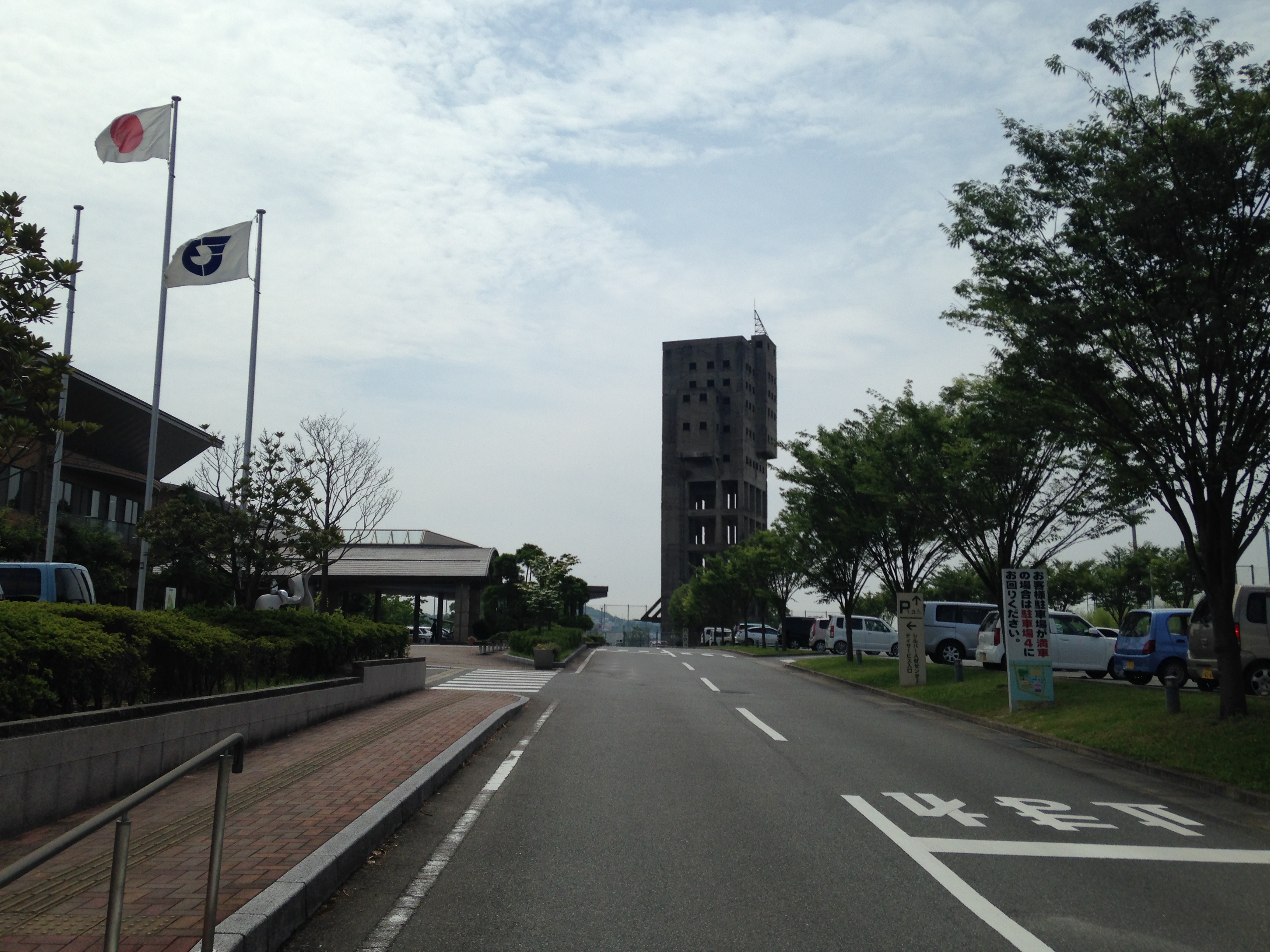

Why put the machinery at the top?
A winding tower is a working structure built around the movement of a cage: an elevator-like carrier travelling between the surface and the mine below. At Shime, the vertical shaft ran directly beneath the tower. The machinery above lifted coal and moved miners to the underground coal seams.
The town’s description explains the contrast visible in its silhouette. The lower levels, from the first through fifth, are formed from columns; the upper levels have walls. A large space near the top accommodated the 1,000-horsepower motor used to lift the cage. The broad head is connected to the building’s job, rather than being an observation room added for visitors. The town’s structural explanation
For an exterior visit, look for that relationship: the open lower frame, the enclosed upper block and the vertical arrangement above the shaft. The town’s dedicated interpretation site includes drawings and notes that the motor and pulleys formerly in the eighth-floor area have been removed. Do not expect a working hoist demonstration or a ride down the mine.
A wartime structure, then a railway mine
The tower was completed on May 10, 1943. The national cultural-heritage record describes its construction in 1941–43 as part of facilities supplying coal for naval vessels and naval industrial operations. This is industrial and wartime history, not a purpose-built attraction. The structure became a nationally designated Important Cultural Property on December 8, 2009. Cultural Heritage Online
After the war, the mine’s administration passed into the transport and national-railway system. Shime Town’s timeline records that operations stopped in February 1964, followed by the formal closure announcement in July. The concrete tower now makes a vanished system of extraction visible above ground. The town’s mine history
What an ordinary visit includes
The tower stands in the grounds of Shimate, a town welfare and recreation facility with playgrounds, sports spaces and walking paths. This is a place people use for everyday activities. An exterior heritage stop shares that setting; it is not an invitation to explore a deserted industrial site. Shimate’s official grounds guide
The distinction matters because the tower has been repaired, but that does not make the whole interior a public viewing route. The town says conservation work begun in September 2018 was completed in October 2021. It describes the work as partial repairs to extend the structure’s life, states that seismic strengthening was not carried out, and retains viewing from outside the fence as the normal arrangement. The repair and access explanation
Stay on the permitted side of barriers. Do not use old photographs of people inside as evidence that the same access is available today.
Before travelling: grounds, hours and costs
| Part of the visit | What the published information establishes |
|---|---|
| Tower interior | Not normally open; look for a specific official opening announcement |
| Tower exterior | Normal viewing is from outside the fence |
| Adjacent multipurpose square | Free public use when it is not reserved; reserved use can exclude other visitors |
| Shimate building | Normally 9:00 a.m.–9:00 p.m. on opening days |
| Shimate reception | 9:00 a.m.–5:00 p.m. |
The square’s free-use rule is not a ticket for entering the tower. Equally, the building’s opening hours are not a published timetable for climbing the tower or a guarantee of unrestricted outdoor access. Shimate normally closes on Mondays, with the following day used when Monday is a public or substitute holiday. Confirm the facilities and grounds you need before setting out. Grounds and use conditions · Building and reception hours
We have not confirmed a separate exterior-viewing admission charge, a current gate-closing time for every part of the grounds, or a complete step-free route. Ask the facility about the access you need rather than assuming its different areas operate identically.
Getting there from Fukuoka
The prefecture’s official tourism listing gives the tower’s location as Shime 495-3, Shime Town, Kasuya District, Fukuoka, and directs visitors to use Shimate’s parking. Its public-transport approach is Nishitetsu bus stop Higashi-koendai 2-chome (東公園台2丁目), about a two-minute walk away. Fukuoka’s official tourism listing
For route planning, keep the Japanese stop name. Use Nishitetsu’s current timetable and fare search to check your departure point, travel date and return journey. The town’s older access page contains route numbers and frequencies, but this guide has not verified those as a current travel-date itinerary. Do not plan a flight connection around an assumed direct airport bus.
Shimate itself uses the address Shime 451-1. The tower’s site listing and the neighbouring facility therefore do not share an identical address; check which destination and entrance your map is showing. Shimate’s facility information
Special opening does not mean walk-in entry
The town’s September 2026 announcement advertised a special opening of the tower’s first-floor interior on October 31, 2026: two roughly 30-minute sessions, with 30 places per session selected by lottery. Both that announced date and the September 7–October 9 application period have now passed. The town’s special-opening announcement
The notice documents a controlled exception to the town’s normal outside-the-fence viewing arrangement. We have not verified whether the October 31 event took place or was cancelled, and the announcement does not establish current general interior access or future opening dates. For a future visit, check the town’s ordinary viewing guidance and any new date-specific announcement; do not use this past application window as an invitation to enter.
Photographs and the point of the stop
For photographs, keep paths and recreation areas clear and respect other users. We have not established general rules for tripods, drones, organised shoots or commercial publication; ask the relevant authority before planning those uses. The tower’s heritage status does not itself provide a photography permit or permission to cross the fence.
An exterior visit is most rewarding if you want to understand the form of the structure. The visible building was the top of an underground process: coal and people moved vertically, machinery sat above them, and the town later kept the tower after the mine closed.
For another structure whose shape comes from its job, Osaka’s Gate Tower Building shares space with a highway ramp. At Oya History Museum, the space left by extracting stone became the attraction. These are related stories, not nearby additions to a Fukuoka itinerary.
Research note: The linked historical and structural sources were checked on October 25, 2026. We rechecked the ordinary viewing guidance, Shimate grounds and building hours, special-opening notice and prefectural tourism listing on November 4, 2026. We have not visited, booked an opening, verified a travel-date bus journey or observed the tower’s current on-site conditions.