Today I Learned
G-Cans Underground Temple: Flood Control You Can Visit
Visit G-Cans in Kasukabe: how the underground temple controls floods, the ¥1,200 tour, advance booking, Japanese-language guidance and getting there.
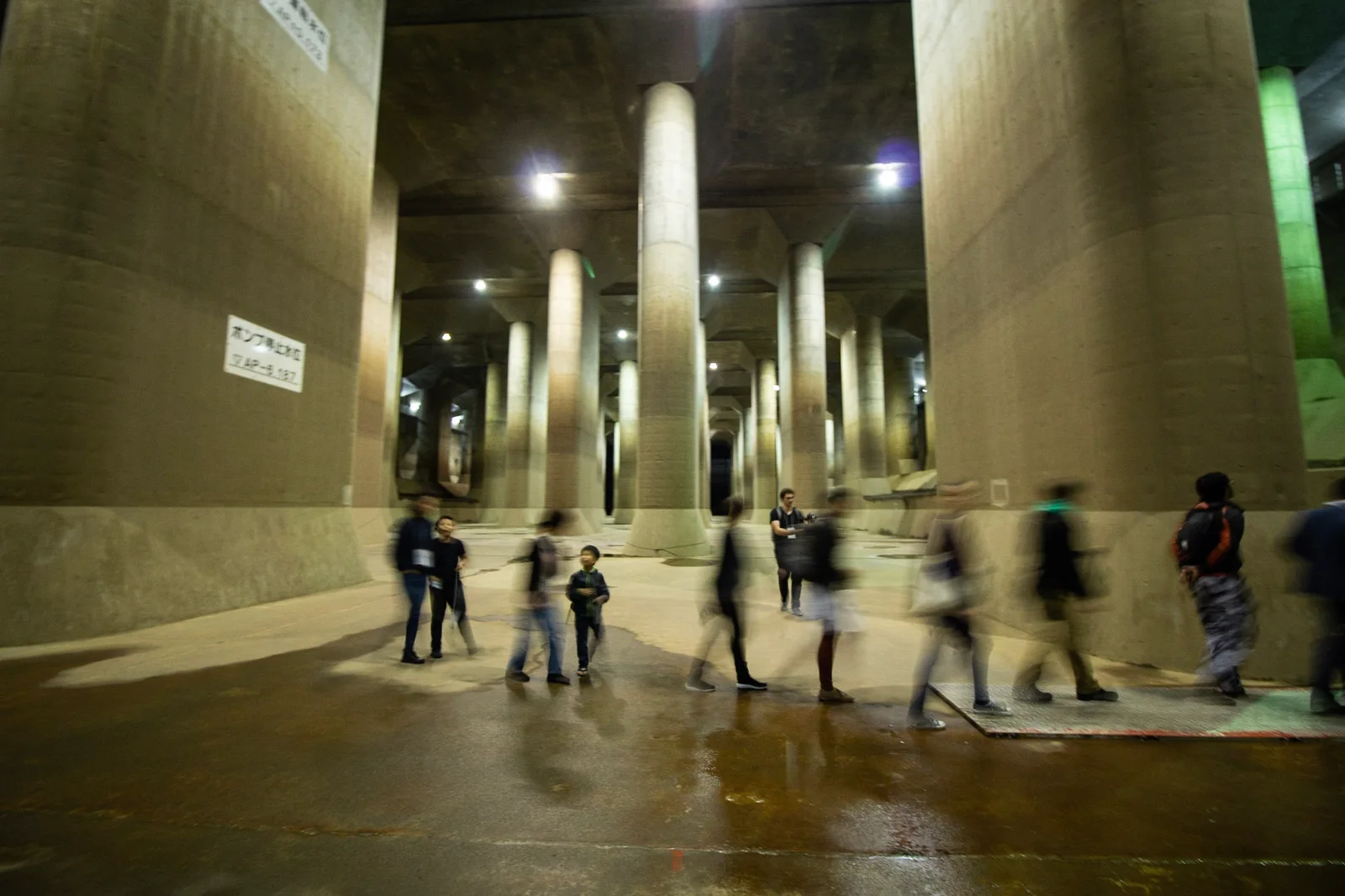
The underground temple at G-Cans in Kasukabe, Saitama, has 59 enormous concrete pillars. Their scale explains the nickname. The hall’s everyday purpose is equally remarkable: it helps move floodwater away from vulnerable communities.
You can see this working infrastructure on a guided visit. The basic Underground Temple Course costs ¥1,200 and takes about 55 minutes, but it needs advance booking and involves stairs and Japanese-language instructions. Official course details
Research note: We have not visited G-Cans in person. This guide uses official engineering and visitor information checked on September 26, 2026.
Photo: Ubahnverleih, November 2018, via Wikimedia Commons, CC0. Resized and converted to WebP.

Why this landscape needs an underground river
The Naka and Ayase river basins form a shallow, low-lying landscape surrounded by larger rivers. Water drains slowly across the gentle slopes. As the area became more urban, less rain could soak into the ground, putting more pressure on its waterways.
The Metropolitan Area Outer Underground Discharge Channel gives some of that water another route. During floods, it takes excess water from smaller rivers and channels, sends it down shafts and through underground tunnels, then pumps it into the larger Edo River. It reduces flooding in the surrounding basins; its remit is more specific than protecting all of Tokyo. MLIT’s explanation of the system
Thinking of G-Cans as a giant river bypass helps make sense of what you visit. The water is being transferred through the landscape. This is flood-control infrastructure, rather than a sewage-treatment plant.
What the concrete temple does
The famous hall is the surge tank, which slows water arriving from the tunnels so the pumps can work steadily. It also helps manage reverse flow if pumping stops suddenly.
The tank is 177 metres long, 78 metres wide and 18 metres high, situated about 22 metres underground. Those pillars contribute weight that helps resist the upward pressure of groundwater. The architecture comes from a surprisingly tangible problem: keeping this vast underground structure from lifting. There is even a sports ground above it. MLIT’s surge-tank description
The often-quoted 50-metre depth belongs to the tunnels. They run roughly 6.3 kilometres beneath Route 16, connecting the system’s shafts. Separating the tunnel from the tank makes the dimensions much easier to picture. MLIT’s tunnel description
Booking the basic visit
Choose 地下神殿コース, the Underground Temple Course, on the official course page. It combines an introductory explanation with time in the surge tank, including a period for looking around. Longer specialist courses exist, but the basic option covers the chamber that draws most first-time visitors.
Individual online bookings open one calendar month before at midnight and close at 23:59 the day before, subject to availability. Same-day bookings are unavailable. Payment is by credit card.
Cancellation is free through three days before the visit; cancelling from two days before costs 100%. Finish check-in at RyūQ-kan’s first floor at least ten minutes before your tour. Read the reservation conditions before choosing a slot.
Language, stairs and shoes
The tour’s explanations and directions are in Japanese. The course page recommends bringing someone who understands the guide, but section 3 of the booking terms says such a companion is required for visitors who do not understand Japanese. Arrange language support and confirm it with the operator before booking.
All courses involve going down and back up approximately 100 steps, with no elevator or escalator. Participants must be able to walk independently. Children below primary-school age cannot join, even with an adult; children of junior-high-school age or younger need adult accompaniment. Published participation rules
Wear trainers with good grip that can get dirty. Slippery soles, thin heels and beach sandals are prohibited. Surfaces may be wet; leave large luggage elsewhere. Visitor conditions
Getting there, with time to spare
The meeting location is at 720 Kamikanasaki, Kasukabe, Saitama. The nearest station is Minami-Sakurai on the Tobu Urban Park Line. From its north exit, the official estimate is a 25–30-minute walk, about 2.3 kilometres. Local buses are limited, and taxis are not reliably waiting at the station; arrange one in advance if needed. Official access information
Check the operator’s latest notices before travelling. Flood operations, maintenance and safety checks can change or cancel visits, including after the weather improves. An operational tour may use a restricted route; a route change does not itself qualify for a price reduction or refund. Course conditions
That uncertainty is part of visiting a flood-control facility. The chamber’s ability to receive water is the reason this extraordinary space exists.
Questions before you go
Is the G-Cans underground temple 50 metres deep?
The surge tank is about 22 metres underground. The 50-metre figure refers to the deeper water-transfer tunnels.
Can I visit without a reservation?
The underground tour requires advance booking. Individual reservations close at 23:59 the day before, subject to availability; same-day reservations are not accepted.